
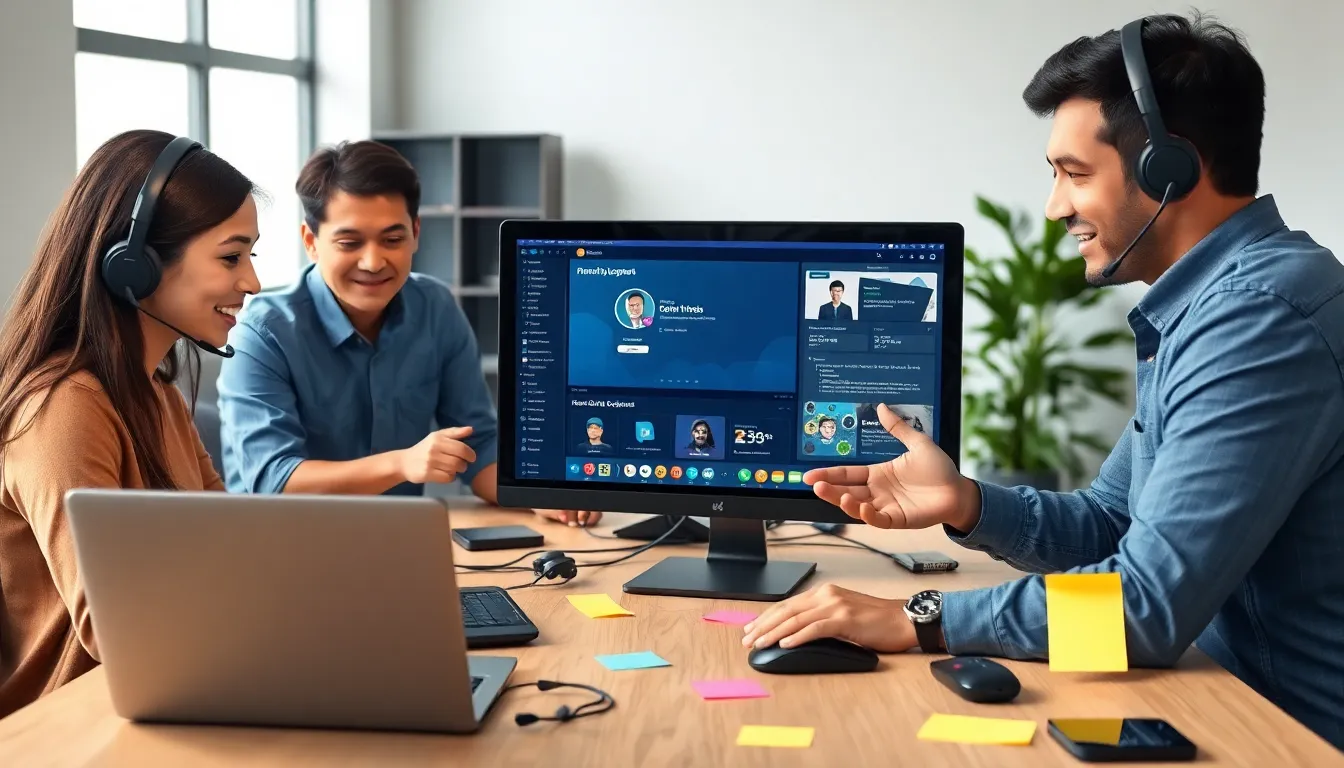
In today’s fast-paced world, remote help desk software is the superhero every business needs—minus the cape and tights. Imagine a tool that swoops in to save the day, tackling tech troubles from anywhere in the world while you sip your coffee in your pajamas. Sounds dreamy, right?
With the rise of remote work, having a reliable help desk solution isn’t just a luxury; it’s a necessity. It empowers teams to resolve issues swiftly, keep customers happy, and maintain productivity without the hassle of long commutes or office drama. Let’s dive into the wonders of remote help desk software and discover how it can transform your support operations into a seamless experience that even your tech-challenged uncle would find easy to navigate.
What Is Remote Help Desk Software?
Remote help desk software enables support teams to assist users with technical issues without requiring physical presence. This software streamlines communication and problem resolution between IT departments and end users. It offers various features like ticket management, real-time chat, and remote desktop access, which enhance both efficiency and satisfaction.
Users can submit support requests through multiple channels, including email, chat, or web forms. Each incoming request generates a ticket that tracks the issue from initiation to resolution. Companies find that ticket management features help prioritize and assign tasks effectively.
Real-time chat functionalities allow quick interactions, facilitating immediate responses to user inquiries. This instant communication often resolves problems more swiftly than traditional methods. Furthermore, remote desktop access empowers support personnel to troubleshoot directly on a user’s device, simplifying the resolution process.
Investing in remote help desk software proves beneficial for organizations of all sizes. It enhances employee productivity, reduces downtime, and improves overall service delivery. Data shows that companies utilizing remote support tools report higher customer satisfaction and decreased operational costs.
Remote help desk software serves as a vital asset for businesses. It equips support teams with the tools needed to resolve technical issues efficiently and effectively. Adopting this technology can transform how organizations manage user support in a remote work landscape.
Benefits Of Remote Help Desk Software

Remote help desk software streamlines support operations, providing significant advantages to organizations. Discover its key benefits below.
Increased Efficiency
Increased efficiency results from the ability to resolve issues quickly. IT teams manage tickets effectively by prioritizing requests based on urgency. Support staff gains access to real-time information, enhancing decision-making processes. Quick interactions through chat functions lead to faster resolutions, eliminating prolonged downtime. Additionally, remote desktop access allows technicians to troubleshoot directly, minimizing the time needed to fix problems.
Enhanced Customer Satisfaction
Enhanced customer satisfaction emerges as a direct outcome of prompt support actions. After resolving issues swiftly, organizations witness a rise in consumer confidence and loyalty. Effective communication fosters a positive experience for users, making them feel valued and understood. Support teams that utilize remote help desk software can easily track and analyze customer feedback, allowing them to make informed improvements. With higher rates of successful issue resolution, businesses ultimately build stronger relationships with their customers.
Key Features To Look For
When selecting remote help desk software, specific features enhance functionality and effectiveness. Understanding these features aids organizations in making informed choices.
Multi-Channel Support
Multi-channel support allows users to connect through various platforms like email, chat, and social media. This flexibility ensures customers can reach help desks via their preferred methods. It streamlines communication for support teams, as they can handle requests from a central interface. By integrating multiple channels, organizations enhance accessibility and responsiveness, ultimately boosting customer satisfaction.
Reporting and Analytics
Reporting and analytics tools provide valuable insights into support performance and user behavior. Detailed metrics help in tracking ticket resolution times, user satisfaction ratings, and workflow efficiency. Organizations can identify patterns and address common issues based on collected data. These features allow businesses to make data-driven improvements. Enhanced reporting keeps teams informed and ready to adapt to user needs swiftly and effectively.
Remote Access Capabilities
Remote access capabilities empower support teams to resolve issues directly on users’ devices. This feature significantly reduces troubleshooting time because technicians can diagnose and fix problems remotely without unnecessary delays. Secure connections maintain user data safety while facilitating quick solutions. Empowered by remote access, IT teams enhance overall productivity and service quality. Users experience seamless support, resulting in improved satisfaction with IT services.
Popular Remote Help Desk Software Options
Numerous remote help desk software options enhance support team efficiency and customer satisfaction. Below are three notable choices.
Software A
Software A offers comprehensive ticket management features. With the user-friendly interface, agents navigate issues effortlessly. Users submit support requests via multiple channels, streamlining communication. Real-time chat functionality allows for immediate responses, increasing resolution speed. Moreover, integrated remote desktop access aids technicians in troubleshooting directly on end-user devices, drastically reducing downtime. Organizations enjoy robust analytics that monitor ticket response times and customer satisfaction metrics. Cost-effectiveness makes Software A ideal for small to mid-sized businesses seeking reliable support solutions.
Software B
Another strong choice, Software B focuses on multi-channel communication. Companies utilize email, chat, and social media to reach support agents, enhancing accessibility for users. Its reporting tools provide actionable insights into team performance and user interactions. Customizable workflows help IT teams manage tickets based on priority levels, ensuring urgent issues receive prompt attention. Furthermore, the platform allows scheduled follow-ups for unresolved tickets, fostering a more thorough support approach. Software B stands out for businesses requiring adaptable and detailed support processes.
Software C
Software C prioritizes collaboration among support teams. Integrated tools facilitate knowledge sharing, enabling team members to access shared resources quickly. Multi-lingual support features cater to diverse user bases, expanding service capabilities across regions. Users appreciate the intuitive dashboard, simplifying ticket tracking and management. Remote desktop capabilities empower technicians to resolve issues efficiently without lengthy phone calls. Software C’s affordable subscription plans appeal to startups and larger enterprises alike. Its emphasis on collaboration and user-friendly design significantly enhances overall service quality.
Remote help desk software is a game changer for businesses navigating the complexities of remote work. By streamlining support operations and enhancing communication between IT teams and users, it fosters a more efficient and responsive environment. The ability to resolve issues swiftly not only boosts productivity but also elevates customer satisfaction.
As organizations continue to adapt to remote work dynamics, investing in the right remote help desk solution is essential. With various options available that cater to different needs and sizes, companies can find a tool that aligns with their goals and enhances their support capabilities. Embracing this technology is a step toward building stronger relationships with customers and ensuring smooth operations in an ever-evolving workplace.


