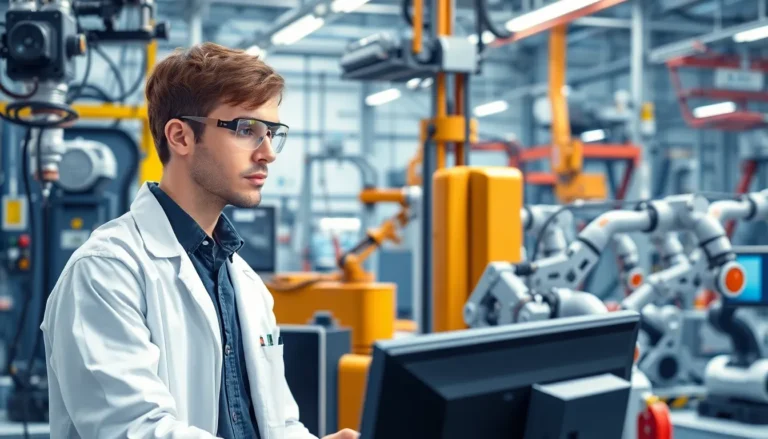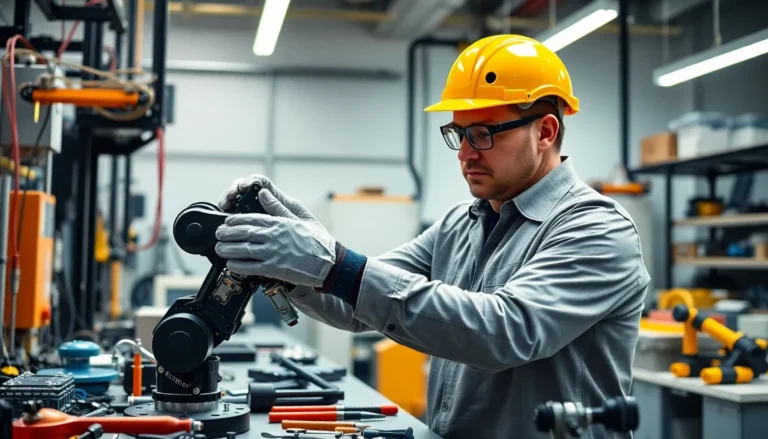

Robotics isn’t just about shiny metal arms and whirring gears; it’s the future knocking at our door with a friendly wave. Imagine a world where robots handle the mundane, leaving humans free to focus on creativity and innovation. Sounds like a sci-fi movie, right? But it’s happening now, and it’s time to get excited about the possibilities.
From automating tedious tasks to revolutionizing industries, robotics is transforming everyday life. Whether it’s a vacuum that cleans up after your pets or a robot that can perform surgery with precision, these marvels are here to make life easier—if they don’t take over the world first! Dive into the fascinating realm of robotics and discover how these incredible machines are shaping our future, one algorithm at a time.
Overview of Robotics
Robotics is a multidisciplinary field that combines engineering, computer science, and technology to create machines capable of performing tasks autonomously. Robots can range from simple devices to complex systems with advanced artificial intelligence. These machines are designed to interact with their environment, often mimicking human actions.
In industries, robotics enhances productivity by automating repetitive tasks. Manufacturing robots perform precise assembly operations, significantly reducing errors and increasing output. Additionally, warehouses use robotic systems for inventory management, leading to faster fulfillment processes.
Healthcare experiences remarkable advancements due to robotic technology. Surgical robots enhance precision in operations, improving patient outcomes. Rehabilitation robots assist individuals recovering from injuries, promoting faster recovery and better mobility.
Household robots also illustrate the diversity of applications within robotics. Vacuum robots simplify cleaning tasks, allowing users to focus on other activities. Similarly, lawn care robots maintain yards efficiently, providing convenience for homeowners.
Education benefits from robotics as well. Educational robots help students learn programming and engineering concepts through hands-on experiences. These interactions foster interest in STEM fields, preparing the next generation for future technological advancements.
The evolution of robotics continues to transform various sectors, merging automation with human creativity. As technology advances, robots will likely play an even more significant role in everyday life, enhancing efficiency and improving quality of life across multiple domains.
Applications of Robotics

Robots play a crucial role in various sectors, enhancing efficiency and transforming operations. The following subheadings explore two key categories of robotics applications.
Industrial Robotics
Industrial robotics focuses on automating production processes. These robots perform tasks such as welding, painting, and assembly with high precision and speed, significantly increasing productivity. For instance, the assembly line in automotive manufacturing relies heavily on robotic arms, allowing for consistent output and reduced labor costs. Data indicates that implementing industrial robots can boost production rates by up to 20%. This technology reduces human error in repetitive tasks while enhancing safety in hazardous environments. As industries adopt these machines, they achieve lower operational costs and improved quality control.
Service Robotics
Service robotics encompasses robots designed to assist humans in various capacities. These systems aid in sectors like healthcare, hospitality, and household tasks. In hospitals, robots assist with surgery, offering greater accuracy and resulting in faster recovery times for patients. Examples include robotic surgical systems that facilitate minimally invasive procedures. Robotics in the service sector also extends to household devices. Robotic vacuum cleaners and lawn mowers automate mundane chores, allowing users to invest their time in more meaningful activities. According to industry reports, the demand for service robots is expected to grow by over 25% annually through the next five years.
Advances in Robotics Technology
Robotics technology is continually evolving, integrating advanced components like artificial intelligence and machine learning. These advancements significantly enhance the capabilities of robots, making them smarter and more efficient in various roles.
Artificial Intelligence in Robotics
Artificial intelligence drives numerous innovations in robotics. AI enables robots to analyze data, recognize patterns, and improve decision-making processes. The integration of AI allows robots to perform complex tasks that require adaptability, such as identifying objects in dynamic environments or learning from interactions. Surgical robots, for example, leverage AI to enhance precision, providing surgeons with real-time feedback and analysis during procedures. The adaptability of AI in robotics also aids in personalizing user experiences, making household robots better suited to individual preferences, which contributes to overall efficiency across applications.
Robotics and Machine Learning
Machine learning plays a pivotal role in refining robotic functions. With machine learning algorithms, robots can learn from past experiences, adjusting their behaviors to perform tasks more effectively. This process involves training robots using large datasets, enhancing their ability to carry out complex operations over time. Industrial robots apply machine learning to optimize production lines, leading to increased output and reduced errors. In the field of service robotics, machine learning enables robots to improve human-robot interaction, making them more responsive to user needs. As this technology advances, robots become increasingly intelligent, resulting in heightened automation across diverse sectors.
Challenges in Robotics
Robotics faces several challenges that impact its development and integration into society. Addressing these issues requires careful consideration of ethical and technical factors.
Ethical Considerations
Robotics raises significant ethical questions. Privacy concerns arise when robots collect and analyze personal data. Bias in AI algorithms can lead to unfair treatment in decision-making processes, impacting various social groups. Employment displacement is another concern, as automation may eliminate jobs across different industries. Ensuring safety in human-robot interactions becomes vital, especially in healthcare and public spaces. These considerations necessitate rigorous guidelines and regulations to promote responsible robotics development.
Technical Limitations
Technical challenges hinder the advancement of robotics. Many robots struggle with navigating complex environments due to limitations in sensors and perception systems. Energy efficiency remains a significant obstacle, limiting the operational time for mobile robots. Programming robots to handle unpredictable situations poses another challenge, as even slight variations can lead to errors. Additionally, integration with existing systems often faces compatibility issues, slowing down deployment. Addressing these technical limitations is essential for enhancing robotic capabilities and ensuring widespread adoption.
Future of Robotics
The future of robotics reveals significant advancements and potential applications in various sectors. Innovations continue to redefine the role of robots in everyday life. The integration of AI and machine learning stands out as a game-changer, enhancing robotic capabilities and decision-making processes.
Healthcare transformation is one crucial area. Surgical robots equipped with real-time feedback improve precision during operations, directly influencing patient outcomes. Rehabilitation robots assist individuals recovering from injuries, supporting faster recovery times. Furthermore, AI-driven household robots provide personalized cleaning experiences, adapting to users’ preferences over time.
Education also experiences a robotics revolution. Educational robots engage students, promoting programming and engineering skills essential for future careers. These interactive tools cultivate interest in STEM fields, preparing the next generation of innovators.
Industrial sectors benefit substantially from emerging robotics technologies. Manufacturing faces substantial productivity boosts through automation of intricate tasks such as welding and assembly. Even logistics experiences a shift, with robotics streamlining warehouse operations and enhancing inventory management.
Projected growth of service robotics is impressive, estimated at over 25% annually. Increased demand highlights the need for robots that assist in healthcare and hospitality. Service robots manage tasks like patient monitoring and food delivery, directly improving service efficiency.
Addressing ethical and technical challenges remains vital for responsible robotics development. Privacy concerns arise with data handling. Potential biases in AI algorithms could compromise fairness and efficacy. Ensuring safety in human-robot interactions is paramount.
Ultimately, the journey into the future of robotics promises a blend of enhanced functionality and ethical considerations. Balancing these aspects will shape the effective integration of robotics into society.
Robotics is undeniably reshaping the landscape of everyday life. As technology advances the integration of AI and machine learning into robotic systems, the potential for enhanced efficiency and functionality grows. This evolution not only streamlines industrial processes but also enriches personal experiences in homes and healthcare settings.
While the benefits are significant, it’s essential to address the ethical and technical challenges that accompany these innovations. Ensuring responsible development and implementation will play a crucial role in maximizing the positive impact of robotics. As society embraces this technological revolution, the future holds exciting possibilities for both individuals and industries alike.